
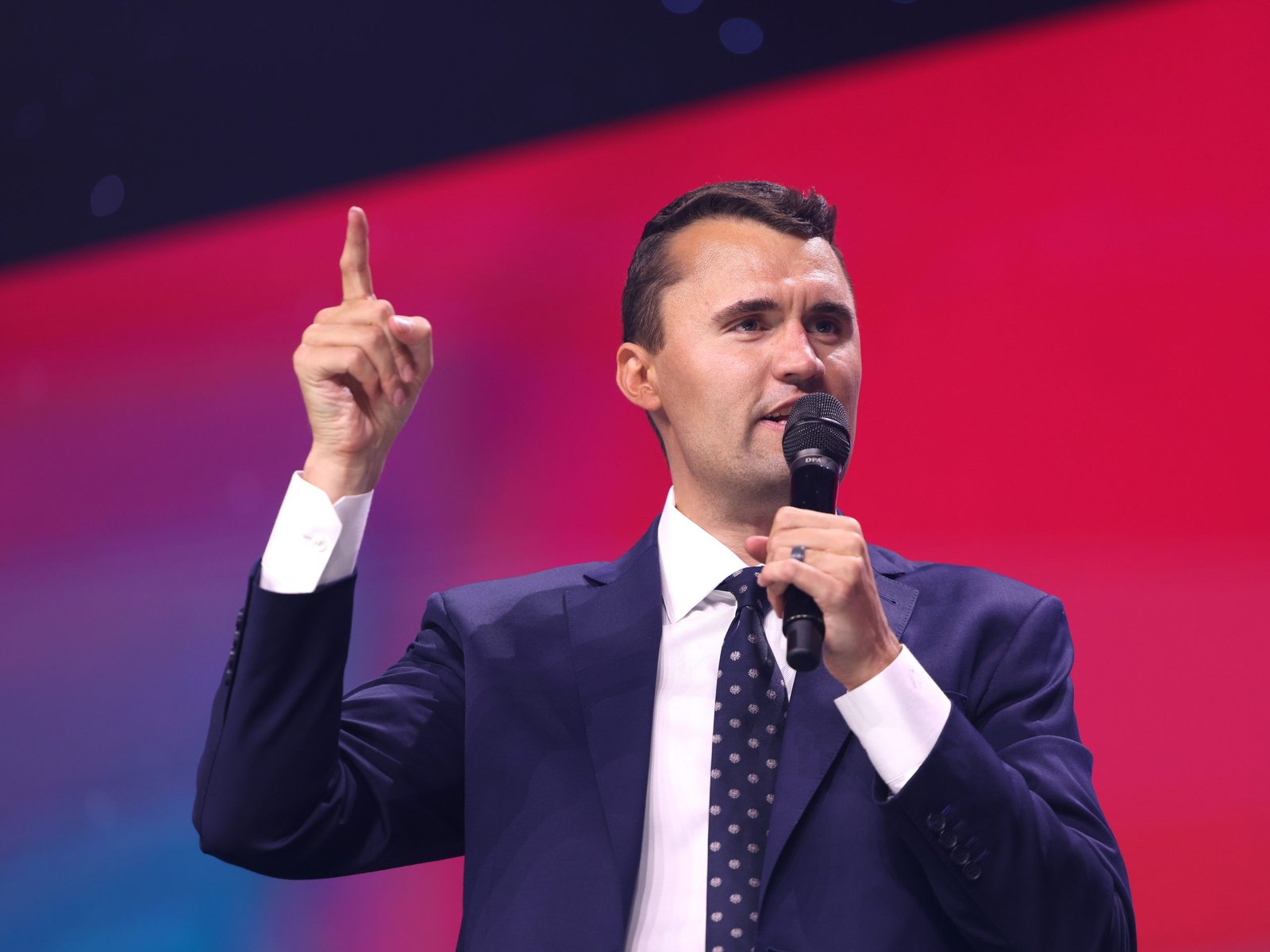
As a young Conservative male, I suspect I fit the stereotype of a generation raised by the late, great Charlie Kirk. I regret to admit, however, that I was not.
I was certainly aware of Kirk–a man only a handful of years my elder–and I always admired him from a distance, but my views were shaped by other figures–though ones who shared an ideology in common with the one championed by Kirk. Of course, I had seen clips of Kirk online and had tuned into his show on more than one occasion–and what always struck me the most about him was his ability to organize and mobilize a movement, as well as the humility he imbibed amidst his tremendous success.
None of this means I agreed with him on every single issue. There is no person on this planet for whom I could suspect that standard would apply. But on the important issues–the ones which mattered most–Kirk stood as a stalwart warrior and a clarion voice for liberty and Christian virtue. He had become the masthead for the Conservative movement–not merely a North Star, but a man who possessed the unique ability to both unite a coalition and establish guardrails to guide it. But in the year since his assassination, those attributes which made him a giant are sorely lacking from the Conservative movement he fought for since he was a teenager.
There was a time when you could perceive an empty hollowness beginning to fill the soul of a nation deprived of its traditions, its religion, its family, and its history–but an active Conservative movement resisted this decay. Today, that same hollowness seems to have claimed the Conservative movement as well.
What is the direction of the most important political coalition in the world in the absence of Kirk? What will it be after Trump? Currently, there seems to be no unifying figure to carry that mantle, though doubtless one will inevitably arise. Vice President J.D. Vance is the heir-apparent to the Republican Presidential nomination–though his bad habit of alienating traditional Conservatives (and blaming those traditional Conservatives when they refuse to change their principles for him) has cast doubt on his ability to lead a strong coalition.
Of course, the movement does not require a unifying figurehead, so long as we possess unified ideals. The trouble is, our movement has–like politics more broadly–come to value personality first and ideology second. This was perhaps nowhere more clear than in regards to the ascension of Donald Trump a decade ago. Further, a growing balkanization has shattered political alliances and splintered our unifying principles. And in an increasingly illiterate age, that one last movement which stood as a bulwark against the loss of our national and civilizational foundations has traded away eternal principles in favor of ever-changing conspiracy theories.
The decentralized media landscape which broke the narrative stranglehold Progressive-dominated institutions once held over information has also served to foster the growth of wacky fringe elements in both parties which insist all the evidence which disproves their grievance-driven claims was cooked up by those in league with the unseen conspirators.
In response, some have offered terrifying government restrictions on content. But this is no solution either. The free speech advocate Charlie Kirk could have told you that. The only real, lasting, meaningful solution is that each of us takes time to catch our breath, educate ourselves not only on what we believe but why we believe it, and reject grievance ideology in all its forms. In short, we should try to be more like Charlie Kirk.
For Conservatives, we must remember the dangers inherent in the Socialism championed by modern Progressives and combat it together–even when we possess critical disagreements with one another. Likewise, we must understand and reject the ideas which animate Socialism and Collectivism and we would be fools to embrace them ourselves, as some on the supposed Right have done. Socialism cannot be beaten by appeasement, it must be defeated outright.
Lastly, it is our duty to be informed and to be involved. No one person can fill the hole left in Charlie Kirk’s absence. But perhaps if enough of us answer the call, we can make a real difference. That’s what Charlie Kirk believed, and I think that’s what he’d tell us were he alive today.
While I cannot honestly say that my beliefs were shaped directly by Kirk, there is still time for each of us to say that our actions were inspired by him. As for myself, it was the vacuum left by Kirk which convinced me to launch this endeavor on which I am now embarked. A certain voice was missing from our discourse, and though my loudest shout might not even attain to the softest whisper from Kirk’s mouth, I felt I had a duty to stand in the gap.
For Charlie, his family and friends, and the movement he lived and died for, we all owe it our best shot.






Leave a Reply